

You've set up your helpdesk, trained your agents, and fine-tuned your ticket templates. Then, during a meeting, someone casually asks:
"By the way, where is our support data actually stored?"
Silence. Someone shrugs. The conversation moves on.
And that's precisely the problem.
When evaluating a helpdesk solution, server location is one of the most overlooked factors—and one of the most important. It doesn't just affect loading times. It impacts your legal compliance, data security, customer trust, and even your ability to win larger business customers.
Choosing a helpdesk isn't just a technical decision. It's a business decision.
GDPR Compliance Is Not Just a Legal Checkbox
Every helpdesk processes customer data by design. Names, email addresses, communication history, attachments, and internal notes—all of this falls under the General Data Protection Regulation (GDPR).
While GDPR may sound like a legal topic reserved for compliance teams, it has very real implications for everyday business operations.
If your helpdesk provider stores data on servers in the United States, customer information may potentially fall under the scope of the U.S. Cloud Act. Under certain circumstances, U.S. authorities can request access to data stored by American companies—even if that data belongs to European customers.
A helpdesk hosted within the European Union, on the other hand, operates under European privacy regulations and data protection standards.
The consequences of non-compliance can be significant. GDPR violations can result in fines of up to 4% of a company's global annual revenue. Since the regulation came into effect, numerous organizations across Europe have faced penalties because their service providers processed data outside approved jurisdictions.
For many companies, data residency has become a critical requirement—not an optional extra.
Performance Matters: Distance Still Affects Speed
Legal considerations are only part of the story. There is also a practical reason why server location matters: latency.
Every time an agent opens a ticket, loads a conversation, or searches for customer information, data has to travel between the user and the server.
If your helpdesk server is located in Frankfurt and your team works in Europe, those requests are processed extremely quickly. If the server is located thousands of miles away—in North America or Asia—every action takes slightly longer.
A few milliseconds may seem insignificant.
But multiply that by hundreds or thousands of ticket interactions every day, and those delays add up. Over time, slower response times create friction, reduce productivity, and negatively affect the user experience for your support team.
For European businesses, European infrastructure simply delivers a faster experience.
Data Sovereignty: Who Really Has Access to Your Data?
Support data is often more sensitive than many organizations realize.
Your ticket system doesn't just contain support requests. It may also include:
Customer contact information
Internal notes and escalation paths
Contract details
Product issues that have not yet been publicly communicated
Potentially payment-related information
The key questions are:
Who operates the servers?
Which country's laws apply?
Are subcontractors involved?
Is there a valid Data Processing Agreement (DPA)?
These aren't questions reserved for IT departments. They are fundamental parts of any serious vendor evaluation process.
And they become especially important if you're working with enterprise customers, pursuing ISO 27001 certification, or operating in regulated industries.
What Enterprise Customers Expect
If you sell to businesses, you've probably seen it before. The procurement questionnaire arrives.
And one of the questions is almost always:
"Where is your data stored?"
Large enterprises, public institutions, healthcare organizations, and financial companies often have strict requirements regarding data residency.
Many require:
Data storage within the EU
GDPR-compliant processing
A valid Data Processing Agreement
Documented security measures
If your helpdesk provider cannot meet these requirements, you may lose opportunities before they even reach the negotiation stage.
Often, prospects won't tell you why. They'll simply choose another vendor.
How HelpSpace Approaches Data Privacy
At HelpSpace, server location has never been an afterthought.
It's a core part of our product philosophy.
Our infrastructure is hosted within the European Union. Key customer data is processed in Germany and managed according to German and European data protection regulations, including GDPR requirements.
This gives our customers:
Full Transparency: You always know where your data is stored and who has access to it.
GDPR-Ready Documentation: A Data Processing Agreement (DPA) is included as part of every customer relationship—not offered as a premium add-on.
Better Performance: European teams benefit from lower latency and faster response times.
Enterprise Readiness: You can confidently answer questions from prospects, auditors, and procurement teams regarding data storage and compliance.
A Quick Checklist for Evaluating Your Current Helpdesk
Before assuming your support infrastructure is compliant and secure, ask your current provider these questions:
Where are your primary database servers physically located?
Do you use backup servers or CDN nodes outside the EU?
Which country's laws govern your company?
Do you provide a GDPR-compliant Data Processing Agreement?
Which subcontractors process customer data?
How do you handle government data access requests?
If your provider cannot answer these questions clearly and in writing, consider it a warning sign.
Conclusion: Server Location Is a Business Decision
The location of your helpdesk servers isn't just an IT concern. It affects compliance, customer trust, operational performance, and your ability to close larger deals.
The good news is that it's a decision you can control—as long as you make it consciously.
At HelpSpace, we've already made that choice.
And we'd be happy to show you how a modern, GDPR-compliant helpdesk can help your team deliver better support while keeping your data secure.
👉 Try HelpSpace for free and discover a customer support platform built for European businesses.
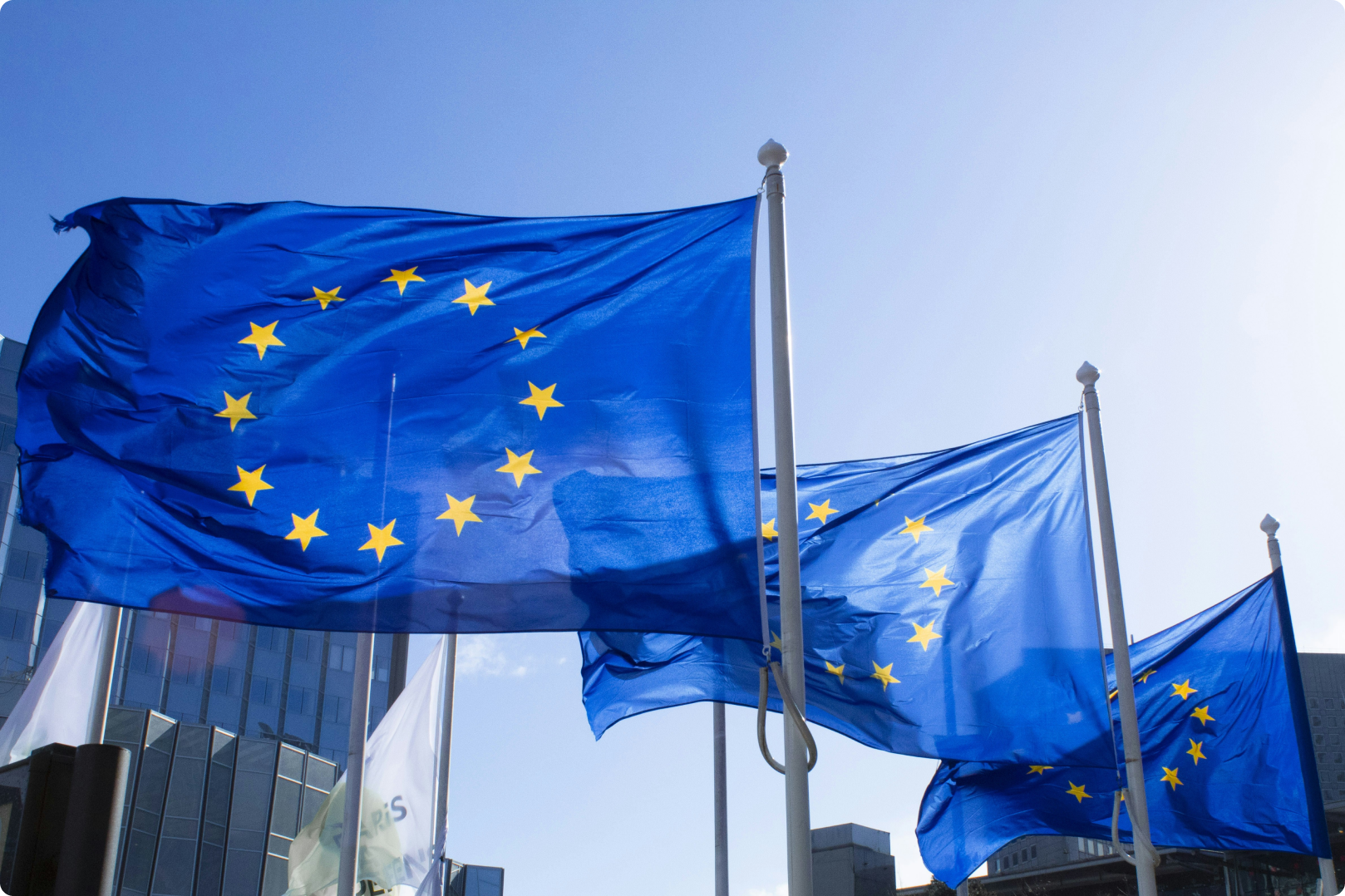
Cover photo by ALEXANDRE LALLEMAND on Unsplash
